Orchestration is sold as making agents smarter. Most of the time it just makes them more expensive. MAESTRO separates latency, capability, and supply — three axes with three cost structures — and argues that mixing models does not reliably beat repeating the best one.
Abstract
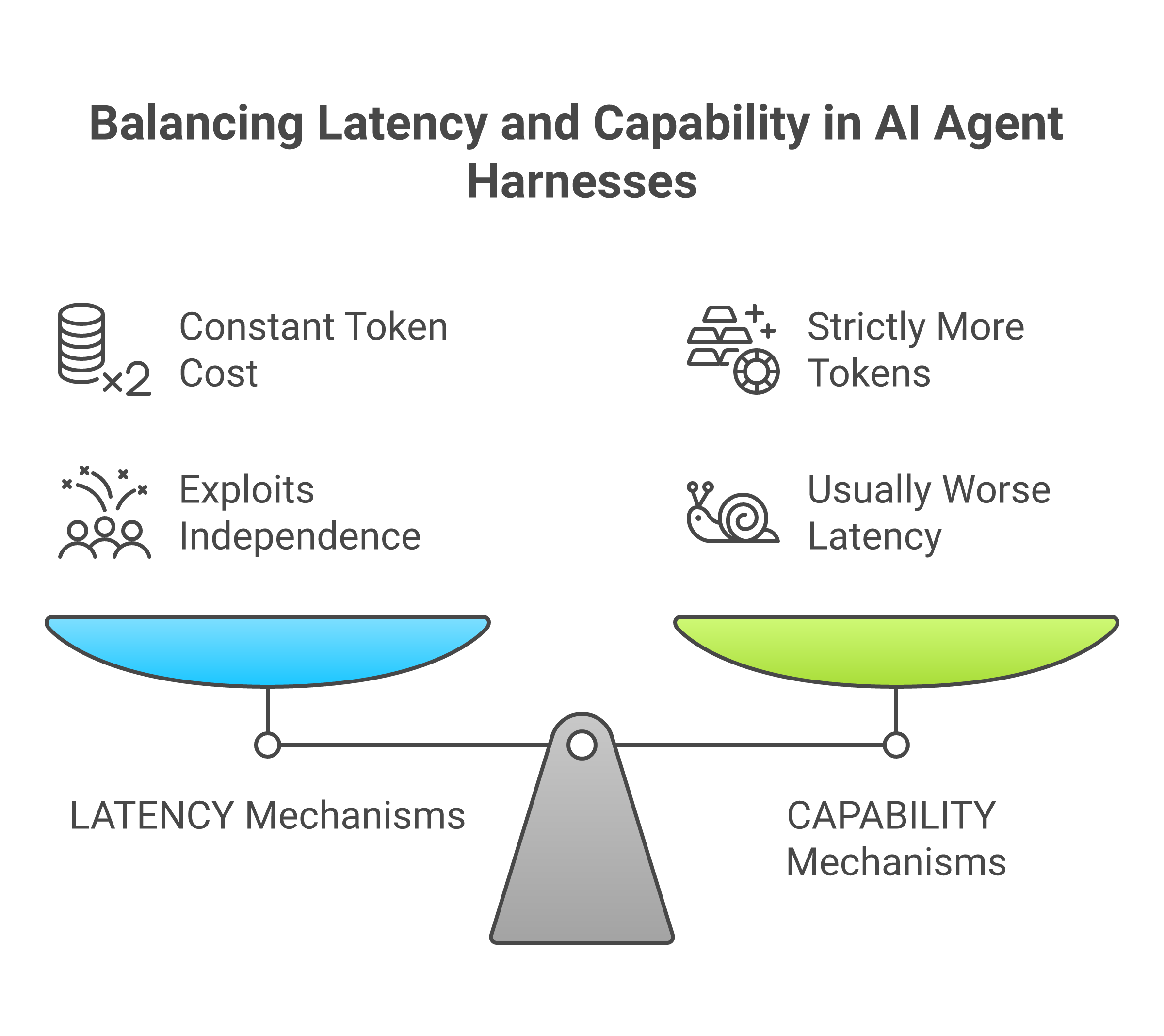
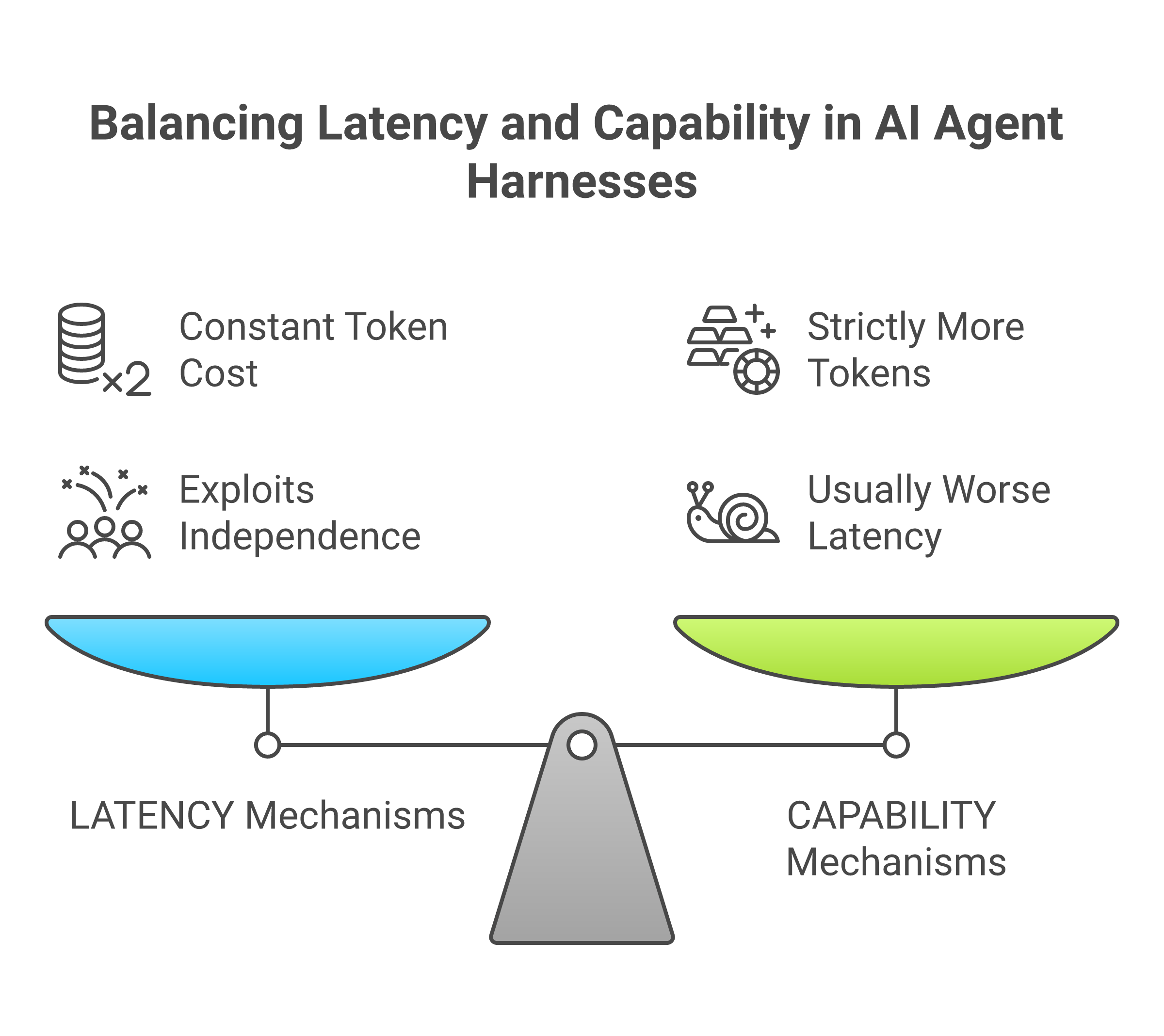
Latency mechanisms buy wall-clock time at roughly constant token cost by exploiting independence in the task graph. Capability mechanisms buy accuracy by spending strictly more tokens, and most of them make latency worse. A third axis — supply — is inventory: which model is even available when the turn starts.
We give a taxonomy of twelve mechanisms, each with the resource it consumes and the structural precondition that must hold for it to pay at all. The field’s central empirical result is negative: mixing models does not reliably beat repeating the best one, and the conditions under which mixing wins — measurable cognitive diversity and per-domain expertise asymmetry — are narrow, checkable, and usually unchecked.
The practical claim is modest: orchestration is a scheduling discipline, not an intelligence multiplier. Sketch v0.2 (September 2026). One measured artifact of our own; no end-to-end outcome data yet. Every number is labelled measured or projected.
The implementation is part of Building Jarvis, an open series on persistent agents. Follow the work and contribute at github.com/globalcaos/tinkerclaw.
Read the paper

More from Building Jarvis
- SEAHORSE: What Actually Makes an Agent Code Well
- STRIATUM: Learned Personality Modulation — Tuning an Agent’s Behaviour from Feedback, Not Static Prompt Text
- BROCA: Giving Agent Recipes a Grammar — A Gradual Type System and Combinator Algebra for Self-Composing Workflows
- SALIENCE: The Death of Fixed Thresholds, the Pyramid of Significance, and Cheap Traversal as the Basis of Next-Generation Vibe Programming
Leave a Reply