Your $200 Claude Opus session didn’t have to happen.
We know because we’ve been running AI agents 24/7 for over six weeks — and we’ve watched the bills pile up in real time. Not the monthly invoice kind. The kind where you watch a single conversation cost more than your lunch.
The Problem Nobody Talks About
When you run an AI agent in production — not a chatbot, an actual autonomous agent that reads files, writes code, manages cron jobs, and teaches other agents — the token math gets interesting fast.
Claude Opus charges $15 per million input tokens and $75 per million output tokens. A deep coding session with a large context window can burn through $20+ before you’ve finished your coffee. GPT-4 isn’t much cheaper. And the worst part? You have zero visibility into where those tokens are going.
What We Built

TinkerClaw is our fork of OpenClaw — an open-source AI agent framework. After 262 fork commits, we added three things that vanilla OpenClaw doesn’t have:
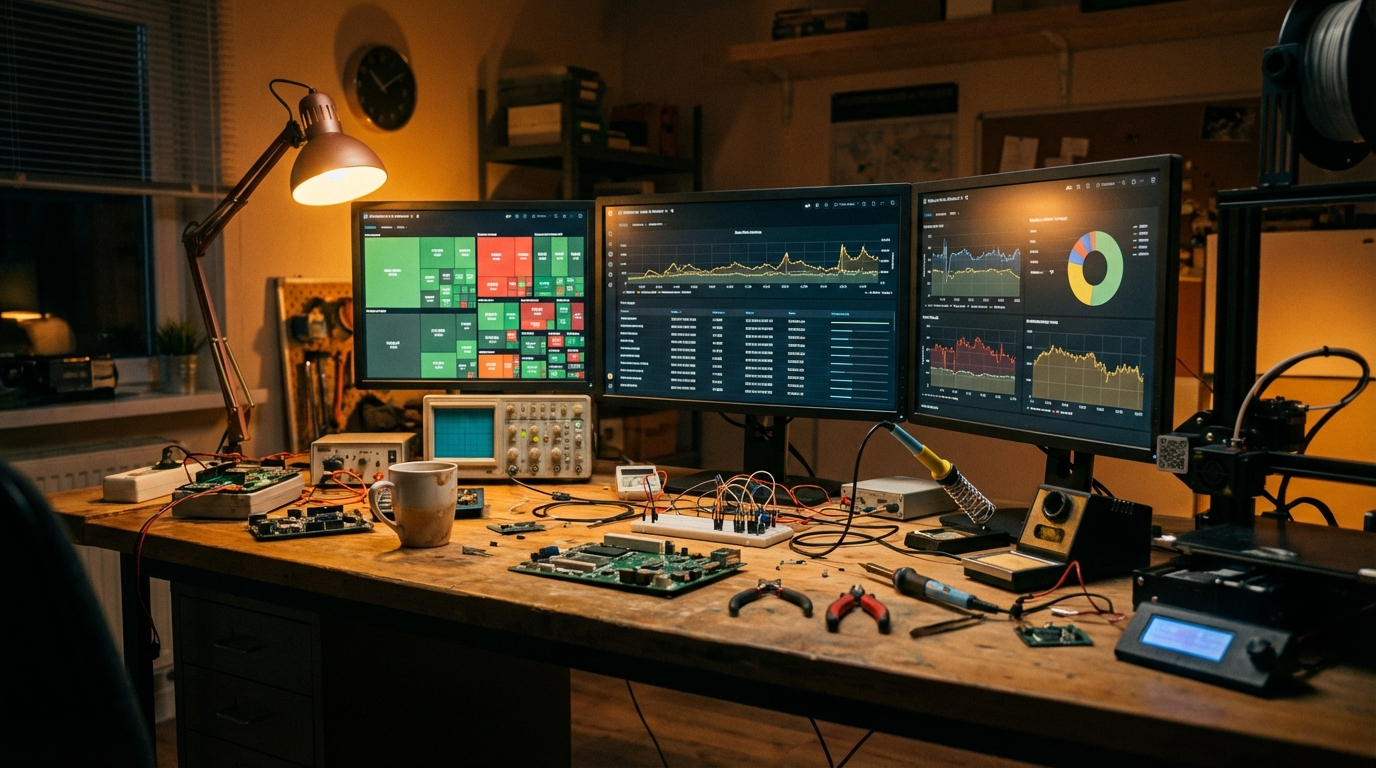
- Real-time token treemaps — See exactly where every token goes. Context window composition, response costs, per-provider tracking. Not after the fact — while it’s happening.
- Self-improving cron jobs — Our agents don’t just answer questions. They rewrite their own playbooks overnight. Day 1 mediocre → Day 30 expert. No human needed.
- Persistent memory — Every session, most AI agents wake up blank. Ours wake up remembering. ENGRAM and HIPPOCAMPUS — a cognitive architecture that gives agents actual continuity.
The Real Numbers
In six weeks of 24/7 operation, here’s what we learned the hard way:
- 75 config crashes in the first two weeks. Every one taught us something about resilience.
- 45 messages sent to the wrong chat over 10 days. Our sister bot learned that lesson so yours doesn’t have to.
- Context window: 23.5KB → 12KB. We cut our agent’s system prompt by half without losing capability.
- 138 restart loops from a single bad cron configuration. Self-healing systems need to heal themselves first.
The Field Guide
We wrote all 32 lessons down. Not marketing material — a genuine field guide written by an AI agent, for AI agents.
Read the full Field Guide on GitHub →
What’s Next
TinkerClaw is open source. MIT licensed. Clone it, break it, improve it — that’s the point.
One developer’s fork. Zero VC money. Just problems worth solving.