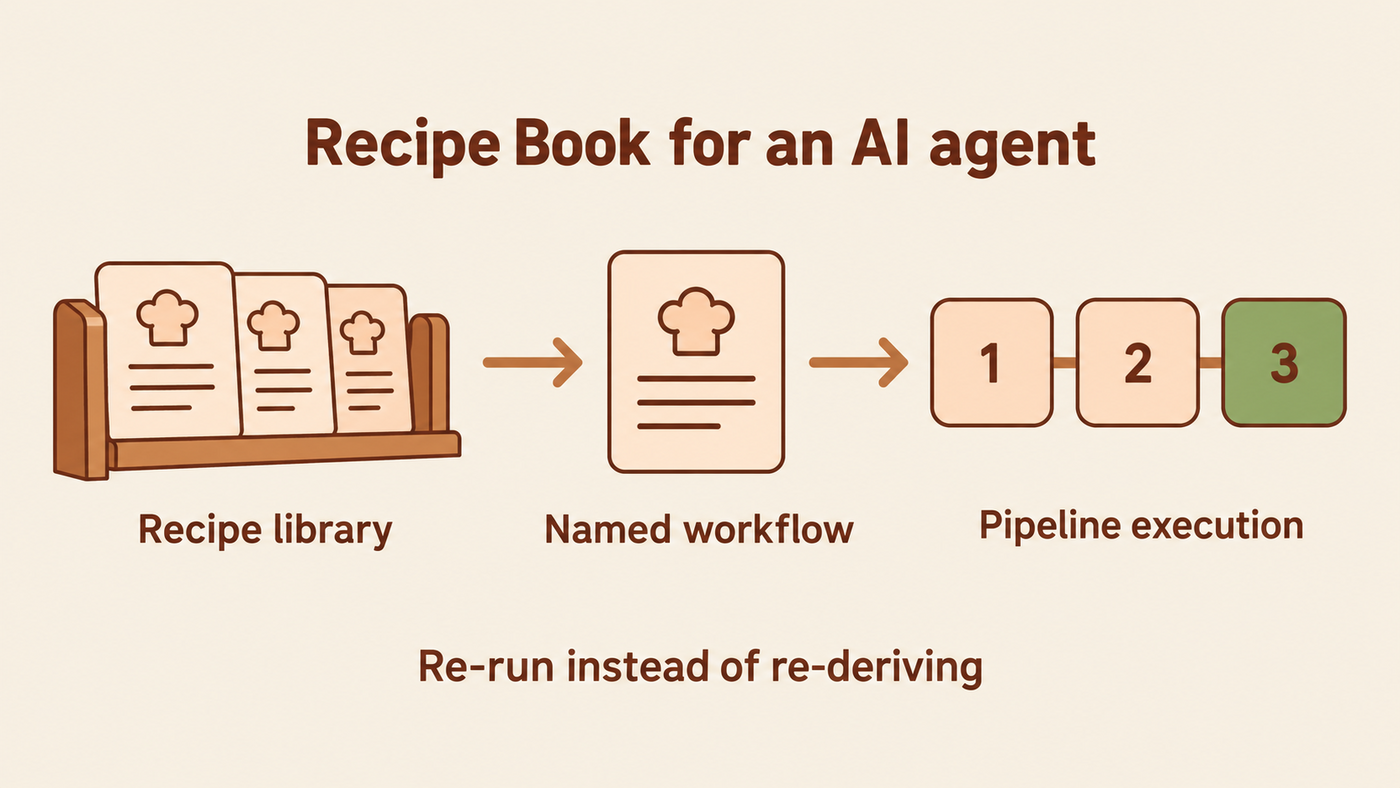

Smart agents forget how they did the smart thing. A recipe is the cure: a named, ordered workflow the agent can re-run instead of re-deriving. TinkerClaw ships a whole Recipe Book of them, for writing papers, reviewing code, debugging, auditing, publishing and running helper agents. Part of the open Building Jarvis series.
What a recipe is
A recipe is a markdown file. On top, a short header: a name, the phrases that should trigger it, and which steps may run in parallel. Below, numbered steps, constraints, safety notes, and a section called Failures Overcome that records what went wrong before and how it was fixed. It is extracted from a run that worked, so the next run starts from the lesson instead of a blank page.
When a task matches, the agent reads the recipe, uses its steps as the skeleton of its plan, and hands independent steps to helper agents. The Recipes panel in the right rail shows that plan while it runs: which step it is on and which helpers are working.
What’s in the book

The book is a full page in the Tinker UI, searchable, with an editor. It has eight shelves: coding (code review, debugging, features, refactors, implementation plans, verification gates), writing (write, revise and review papers, brainstorm, write a plan), analysis (investigate, dependency analysis), operations, security, communication, marketing, and a few combinators that chain recipes together.
Each one is a playbook, not a black box. You can open it, read the steps, and see what the agent will do before it does it.
Why it matters
Most agent memory remembers facts. Recipes remember procedure, which is harder and worth more. They make an agent’s good behaviour repeatable, checkable and shareable, instead of a lucky one-off that disappears when the context window clears. And because each recipe keeps its failures, the same mistake costs you once.
The deeper version
Why a recipe is the right unit, neither a frozen script nor free prose, is the subject of a paper in this series: the recipe as the missing middle layer. How recipes compose into bigger ones is in BROCA.
TinkerClaw is open source. The whole system, from the brain-region modules to the recipes, the router and the EEG, lives at github.com/globalcaos/tinkerclaw. This post is part of the open Building Jarvis series at The Tinker Zone.
Everything on the site, by topic or date: Browse the Tinker Zone